


Why Is Your Blood Sugar High Even After Taking Medicines?
If your blood sugar levels remain high even after taking medicines regularly, you may wonder why your treatment is not working. High blood sugar can happen due to food choices, stress, lack of physical activity, poor sleep, infections, or changes in your body’s insulin needs. Understanding the cause is the first step toward better diabetes control. Consulting a Diabetologist in Dombivli can help you identify the reasons for high glucose levels and receive a treatment plan that suits your health needs. At Sai Hospital, Dr. Nitin Agrawal can help patients understand the importance of regular diabetes monitoring and medical guidance.
What Does It Mean When Blood Sugar Remains High?
Blood sugar, also called blood glucose, is the amount of sugar present in your blood. Your body uses glucose for energy, and insulin helps move glucose from the bloodstream into the body’s cells.
In people with diabetes, the body may not produce enough insulin or use it effectively. As a result, glucose can build up in the bloodstream.
Sometimes, blood sugar remains high even when you take prescribed medicines. This does not always mean the medicine has stopped working. Your treatment may need a review because your health, eating habits, physical activity, or insulin requirements may have changed.
Regular blood sugar testing and medical follow-ups help your doctor understand whether your current diabetes management plan is effective. Consulting a Top diabetologist doctor in Dombivli can help you identify possible causes of persistent high blood sugar and determine whether adjustments to your treatment plan are needed.
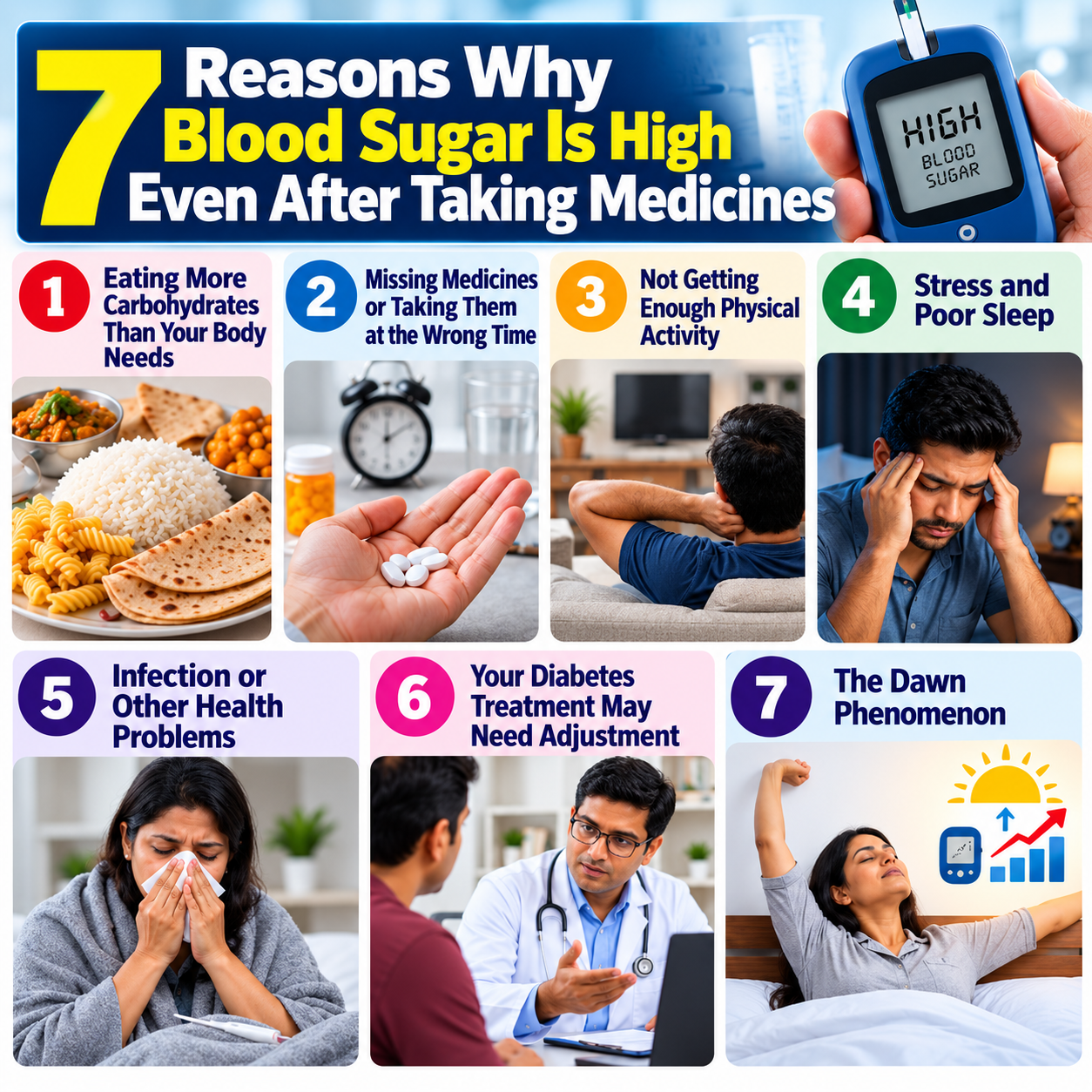
7 Reasons Why Blood Sugar Is High Even After Taking Medicines
Several factors can affect your blood sugar levels. Understanding these common reasons can help you manage diabetes more effectively.
1. Eating More Carbohydrates Than Your Body Needs
Carbohydrates are found in foods such as rice, roti, bread, potatoes, sweets, and sugary drinks. Your body breaks down carbohydrates into glucose, which can increase blood sugar levels.
Eating large portions, having frequent sugary snacks, or drinking sweetened beverages may cause glucose levels to rise even when you take your medicines.
What you can do: Choose balanced meals with suitable portions of carbohydrates, vegetables, protein, and fibre. Avoid skipping meals or following an extreme diet without medical advice. A dietitian can help you plan meals according to your needs.
2. Missing Medicines or Taking Them at the Wrong Time
Missing doses, taking medicines at inconsistent times, or not following the prescribed instructions can affect blood sugar control. Some diabetes medicines need to be taken with meals, while others have different timing requirements.
If your daily schedule is busy, remembering every dose can sometimes become difficult.
What you can do: Follow your doctor’s instructions, use a medicine reminder, and discuss any side effects or difficulties with your doctor. Never increase, reduce, or stop your diabetes medicines on your own.
3. Not Getting Enough Physical Activity
Physical activity helps your muscles use glucose for energy. When you spend most of the day sitting and rarely exercise, your body may become less sensitive to insulin.
This can make it harder to maintain healthy blood sugar levels.
Try regular walking or another physical activity that suits your health and fitness level. Even short walks after meals may help improve blood sugar control. Before starting a new exercise routine, consult The Best Diabetes Doctor in Dombivli to ensure the activity is safe and suitable for your health needs.
4. Stress and Poor Sleep
Stress can affect hormones that influence blood glucose. When you experience ongoing stress, your body may release hormones that raise blood sugar levels.
Poor sleep and irregular sleep schedules can also affect insulin sensitivity and appetite.
What you can do: Maintain a regular sleep routine, practise relaxation techniques, and make time for activities that help you feel calm. If stress or sleep problems continue, discuss them with your healthcare professional.
5. Infection or Other Health Problems
Illnesses such as urinary tract infections, respiratory infections, and fever can increase blood sugar levels. During an illness, the body releases stress hormones that may increase its glucose requirements.
Certain medicines, including corticosteroids, can also raise blood sugar.
What you can do: Monitor your glucose more closely when you are unwell and follow your doctor’s sick-day instructions. Inform your doctor about all medicines you take, including those prescribed by other healthcare professionals.
6. Your Diabetes Treatment May Need Adjustment
Diabetes can change over time. The pancreas may produce less insulin, or the body may become more resistant to insulin. A medicine that worked well previously may no longer provide enough control.
Your doctor may need to review your glucose readings, HbA1c results, current medicines, and overall health before deciding whether treatment changes are needed.
Consulting a Diabetes specialist doctor in Dombivli can help you understand your test results and discuss suitable treatment options.
7. The Dawn Phenomenon
Some people experience higher blood sugar levels in the early morning. This can happen because the body releases hormones that prepare it to wake up, increasing glucose production.
This is sometimes called the dawn phenomenon. High morning readings may also occur because of insufficient overnight glucose control or other treatment-related factors.
What you can do: Record your bedtime and morning glucose readings and share them with your doctor. Your doctor can help determine the cause and recommend appropriate changes if necessary.

How Can You Control High Blood Sugar More Effectively?
Managing diabetes involves more than taking medicines. A consistent routine, regular monitoring, and medical guidance can help you improve glucose control.
Here are some practical steps to consider:
- Monitor your blood sugar: Check your levels according to your doctor’s instructions and maintain a record of the readings.
- Follow a balanced diet: Choose suitable portions and limit sugary drinks and foods with added sugar.
- Stay physically active: Include regular movement in your daily routine, according to your health and fitness.
- Take medicines as prescribed: Follow the recommended dose and timing without making changes yourself.
- Sleep well: Maintain a consistent sleep schedule and aim for adequate rest.
- Attend regular check-ups: Discuss your glucose readings and HbA1c results with your doctor.
- Avoid self-medication: Do not take additional diabetes medicines or supplements without medical advice.
These habits can support treatment, but they do not replace the need for an individual medical plan.
When Should You Consult a Diabetes Specialist?
You should seek medical advice if your blood sugar remains above your target range despite taking medicines as prescribed. Do not wait for symptoms to appear, because high glucose levels may not always cause noticeable signs.
Watch for symptoms such as:
- Frequent urination
- Increased thirst
- Unusual tiredness
- Blurred vision
- Increased hunger
- Unexplained weight loss
- Slow-healing wounds
If you experience vomiting, abdominal pain, deep or rapid breathing, confusion, or severe weakness along with high blood sugar, seek urgent medical care. These symptoms may indicate a serious complication.
A consultation with the Best Diabetologist in Dombivli can help you identify possible reasons for uncontrolled glucose levels and understand which tests or treatment adjustments may be appropriate.
How to Choose the Right Orthopaedic Care in Dombivli
Managing diabetes becomes easier when you understand your condition and receive regular medical guidance. At Sai Hospital, Dombivli, patients can seek medical advice from Dr. Nitin Agrawal regarding diabetes management, blood sugar monitoring, and the importance of following an appropriate treatment plan.
If your glucose readings remain high, keep a record of your results, current medicines, meal timings, and symptoms before your appointment. This information can help your doctor assess your condition more effectively.
Patients looking for a Sugar Specialist Doctor in Dombivli should prioritise appropriate medical qualifications, an individualised treatment approach, and regular follow-up care.
Sai Hospital also provides information about other medical services, including hip replacement surgery in Dombivli. You can also find the hospital’s location through this Google Maps link.
You can consult a qualified diabetes specialist for an assessment of persistent high glucose levels. A Best Diabetes Doctor in Dombivli can review your medicines, test results, lifestyle, and symptoms to guide your care.
Conclusion
High blood sugar despite taking medicines can have several causes, including diet, stress, infections, missed doses, and changes in your body’s insulin needs. The right approach is to identify the underlying reason rather than changing medicines on your own.
Regular glucose monitoring, balanced meals, physical activity, adequate sleep, and medical follow-ups can support better diabetes management. If your readings remain high, consult Dr. Nitin Agrawal at Sai Hospital, Dombivli, for appropriate medical guidance.
Disclaimer: This article is for educational purposes only and does not replace professional medical advice, diagnosis, or treatment.
Google Map
Recent Post

Expert Care for Hand Wrist and Elbow Pain
November 23, 2024

common gynaecological problems
March 19, 2025

Life After Knee Replacement: Do’s and Don’ts for Faster Healing
October 13, 2025